Amid a dazzling array of tea products, top-tier matcha invariably captivates the most discerning palates with its jade-green appearance, orchid-like aroma, and a mellow, lingering sweet aftertaste. Yet, the birth of a premium EU-standard matcha is no accident—it is the crystallization of nature’s bounty, modern technology, and generations of tea-making craftsmanship harmoniously intertwined. Today, let us step into the production sanctuary of Guizhou Ximei Tea Industry to deeply decode the indispensable high-quality secrets behind top-tier matcha.
1. The Golden Origin: High-Altitude Eco-Sanctuaries and Shading Mastery
The legend of high-quality matcha begins in uniquely endowed golden production regions. Ximei Tea’s raw material bases are nestled within high-altitude, cloud-shrouded mountain sanctuaries sitting over 800 meters above sea level.
Natural Advantages: Enveloped in year-round mist with abundant diffused light and fertile, organic-rich soil, this environment creates ideal conditions for tea plants to accumulate rich amino acids and chlorophyll.
Strict Shading Protocols: Prior to harvesting, scientific shading coverage procedures are strictly implemented. By reducing sunlight exposure, the conversion of tea polyphenols into amino acids is promoted, fundamentally eliminating bitterness in the tea liquor and establishing a foundation of freshness and sweet aftertaste.
2. Advanced Craftsmanship: Low-Temperature Steam Fixation
Entering the processing stage, the choice of core techniques directly dictates the final quality of the matcha. Abandoning crude, traditional processing methods, Ximei Tea innovatively adopts internationally advanced low-temperature steam fixation technology.
Enzyme Deactivation: By precisely controlling steam temperature and duration, enzyme activity in fresh leaves is rapidly passivated.
Nutrient & Color Preservation: This process maximizes the retention of the tea's tender emerald green color and rich natural nutrients, successfully avoiding the scorched notes and nutritional degradation typical of traditional pan-firing.
3. The Decisive Step: Traditional Stone Mill Grinding for Micro-Powder
In the decisive pulverization stage, Ximei Tea seamlessly blends Eastern traditional craftsmanship with modern precision manufacturing.
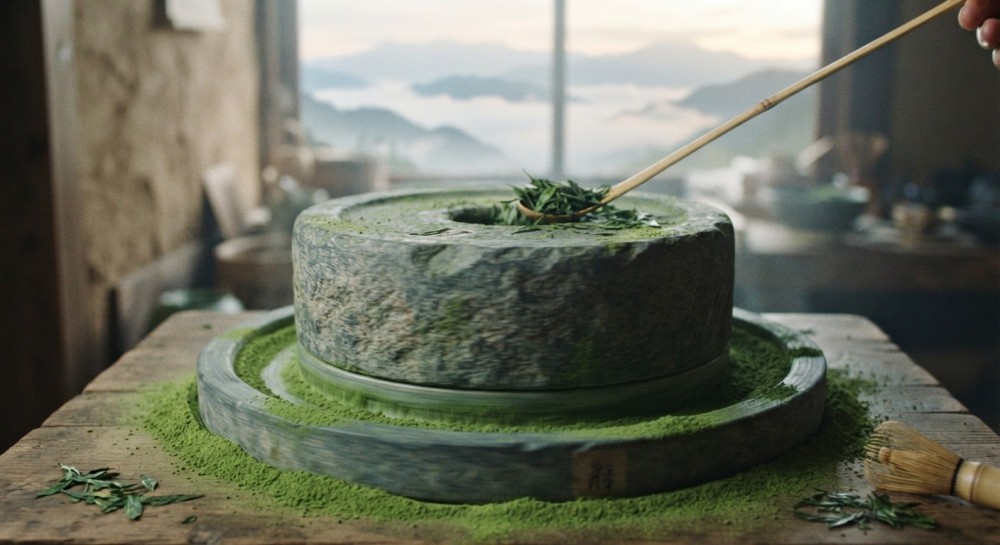
Slow Stone Milling: The enterprise utilizes selected natural blue-stone mills for slow grinding, strictly controlling speeds at around 40 revolutions per minute.
Micro-Finer Texture: Relying on the micro-pressure and gentle friction generated by the mill, tea cakes are slowly ground into ultra-fine powders with a delicate fineness ranging between 1 to 5 microns.
Velvety Sensation: This low-temperature, low-speed physical milling method preserves the cellular structure and complete nutritional profile of the tea, delivering a silk-like, smooth texture upon the palate.
Looking Ahead
Through meticulous control over every single detail—from source ecology and shading coverage to low-temperature steam fixation and traditional slow stone milling—Ximei Tea’s EU-standard matcha successfully passes multiple rigorous international testing standards. Moving forward, Guizhou Ximei Tea Industry will steadfastly uphold its craftsmanship and quality, bringing this green treasure from China’s high-altitude misty mountains to even more high-end consumers worldwide who pursue a healthy lifestyle.