Amid increasingly rigorous regulatory scrutiny over food safety and environmental compliance in the European Union, matcha—hailed for its health attributes and functional benefits—is undergoing a stringent quality screening. For tea procurement professionals deeply rooted in the European market, choosing the right standards and supply chain channels directly dictates brand reputation and regulatory clearance.
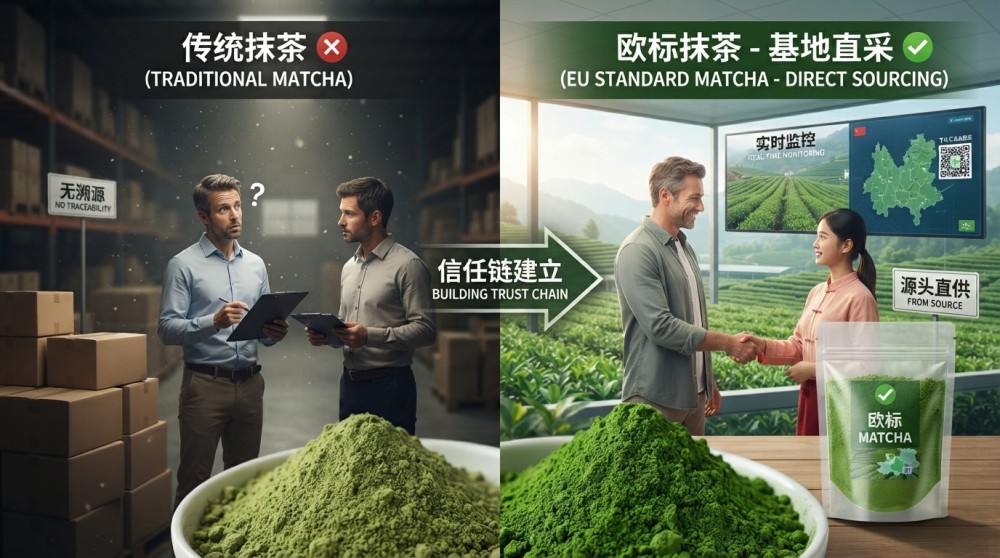
1. Pesticide Residue Standards and Compliance Barriers: EU-Standard Matcha vs. Traditional Matcha
Traditional matcha production has historically prioritized flavor, color, and general domestic distribution standards. While many such products feature exceptional craftsmanship, discrepancies in Maximum Residue Limits (MRLs) and heavy metal testing thresholds across different regions often expose traditional matcha to severe compliance risks under the EU's hundreds of strict pesticide screenings.
In contrast, EU-standard matcha aligns from the very beginning of cultivation with the highest benchmarks set by the European Union and the Codex Alimentarius Commission (CAC). It enforces strict red-line management across source soil, water quality, and organic fertilizer applications. Furthermore, it constructs an end-to-end traceable and auditable compliance framework covering processing, warehousing, and transportation, ensuring every export batch clears customs smoothly and withstands rigorous terminal spot-checks.
2. Why European Buyers Prefer "Base-Direct Sourcing"
In terms of supply chain architecture, a growing number of European brand owners and large-scale distributors are abandoning multi-layered brokerage models in favor of locking in source tea gardens through base-direct sourcing. Three core drivers propel this transition:
Absolute Supply Chain Transparency: European consumers demand profound food transparency. Base-direct sourcing allows buyers to directly inspect a garden’s geography, daily management, harvesting periods, and processing techniques—sometimes leveraging IoT systems and live monitoring for real-time verification, completely dismantling traditional trade opacity.
Cost Efficiency and Stability: Multiple middlemen inflate acquisition costs and introduce quality hazards like improper storage or cross-contamination. Direct-to-source models connect buyers directly with manufacturers to lock in batch specifications, delivering competitive supply chain economics alongside superior EU-grade matcha.
Green Sustainability and ESG Endorsement: Modern European buyers prioritize Environmental, Social, and Governance (ESG) performance. Base-direct sourcing guarantees compliance with international norms regarding ecological preservation, green cultivation, and fair labor practices, serving as a vital narrative asset for European brands fulfilling sustainability commitments.
Conclusion
The divergence between EU-standard matcha and traditional matcha reflects a broader industry upgrade from crude trade to high-standard, branded, and digitalized international commerce. Facing European buyers' relentless pursuit of quality and traceability, tea enterprises must anchor themselves in EU standards and leverage base-direct sourcing to build a transparent, highly trusted supply ecosystem for long-term success in global markets.