As health consciousness, diversification, and premiumization become irreversible trends in the contemporary global consumer market, the traditional tea industry is welcoming unprecedented structural opportunities. Driven by massive population bases, youthful demographic structures, and a growing pursuit of healthy lifestyles, the Southeast Asian and Middle Eastern regional markets are exhibiting explosive growth potential, making them core strategic strongholds for tea enterprises expanding overseas.
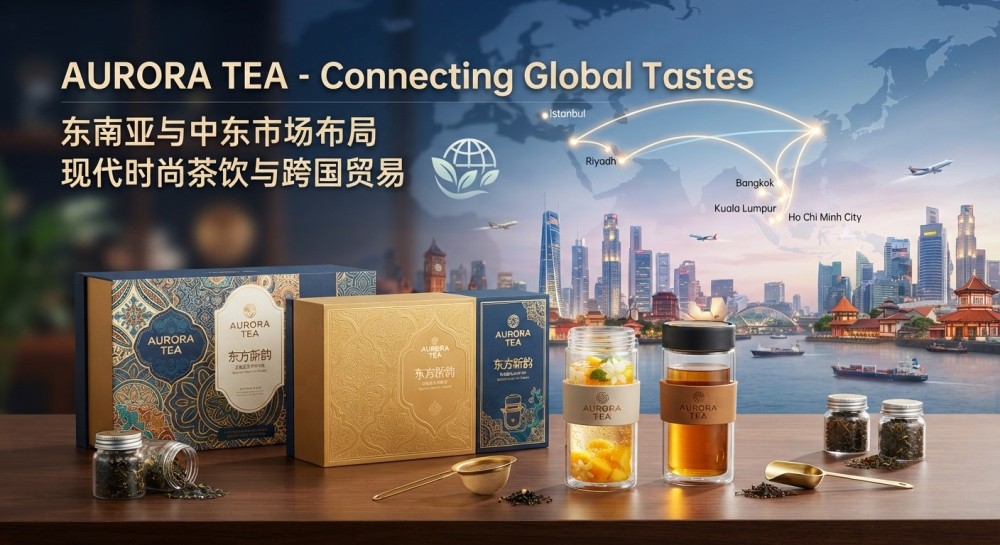
1. Southeast Asia: Riding the Wave of New-Style Tea Culture
In Southeast Asia, accelerated by the rapid popularization of new-style tea cultures and continuous local economic growth, consumer demand for tea raw materials has long transcended traditional single flavors, pivoting instead toward composite products that emphasize taste innovation, visual appeal, and natural health.
Youthful Demand: The younger generation’s enthusiastic pursuit of matcha lattes and fruit tea bases has created a booming market.
Commercial Scale: Modern catering channels demand stable, standardized bulk tea raw materials.
Ximei's Advantage: Capitalizing on direct-from-source cost advantages and agile supply chain response capabilities, Ximei Tea has rapidly established a firm foothold in the Southeast Asian market.
2. The Middle East: Conquering High-End, Luxury, and Halal Standards
Meanwhile, the high-net-worth Middle Eastern market presents starkly different characteristics focused on high-end positioning and gifting. Middle Eastern consumers possess a deep historical affinity for tea culture, accompanied by exceptionally high demands for premium, prestigious gift teas and specialty-flavored teas.
Strict Entry Barriers: Entering the Middle East requires navigating rigorous regulatory hurdles, particularly strict oversight regarding Halal certification and food safety/hygiene standards.
Precise Alignment: By deeply analyzing local consumer psychology and regulatory requirements, Ximei Tea has exerted comprehensive efforts across product R&D, packaging design, and production certification.
Meeting Dual Expectations: This precision perfectly fulfills the Middle Eastern market’s dual expectations for luxury quality and rigorous compliance safety.
3. One-Stop Global Solutions: Moving Beyond Simple "Product Export"
Facing a rapidly changing global market, a single model of "product export" can no longer satisfy modern commercial competition.
By deeply analyzing the consumption preferences and cultural differences of various overseas regions, Ximei Tea provides global partners with comprehensive, one-stop overseas expansion solutions ranging from raw material supply and formula customization to white-label branding (OEM). The enterprise exports not only premium products, but also mature business models and cultural values.
Looking Ahead
Seizing the new opportunities presented by global health consumption requires both sharp market insight and robust comprehensive strength. Guizhou Ximei Tea Industry will continue to use the Southeast Asian and Middle Eastern markets as breakthroughs, deeply cultivating and refining its product matrix to run at full speed on the grand track of globalization, showcasing the "acceleration" of Chinese tea enterprises.