As traditional consumer hinterlands for tea, Russia and the five Central Asian nations have always been core markets closely monitored by global tea wholesalers. Entering 2026, driven by the restructuring of regional economic landscapes and the evolution of consumer philosophies, the region's wholesale tea market is exhibiting distinct trends toward diversification, premiumization, and health consciousness.
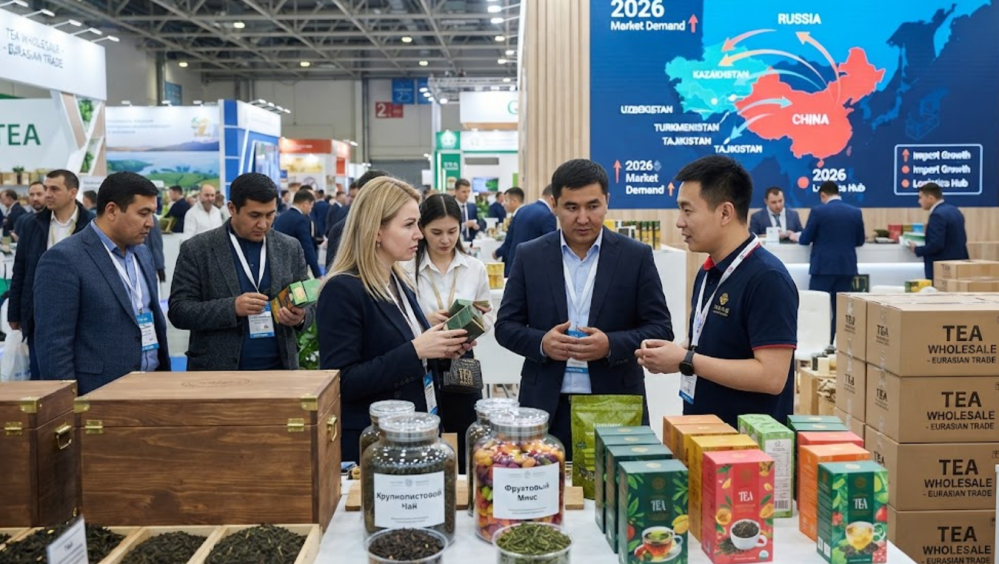
1. Solid Foundation for Traditional Black Tea, with Blended Flavors Driving Growth
In Russia as well as Central Asian countries such as Kazakhstan and Uzbekistan, black tea has long held absolute dominance, accounting for over 70% of total market consumption. In 2026, this traditional advantage remains strong, though the demand format has undergone profound changes. Crude, loose-leaf teas are rapidly transitioning toward refinement and branding.
Simultaneously, younger generations' pursuit of novel tastes has fueled a surge in sales of flavored and blended teas (such as black tea infused with vanilla, citrus peel, berries, and floral notes). In wholesale markets, high-quality CTC black tea (crush, tear, curl) remains an essential staple, but the procurement share of fruit and herbal blends has risen significantly compared to previous years, emerging as a key profit-growth direction for small and medium-sized wholesalers.
2. Popularization of Green Health Concepts, with Green and Herbal Teas in High Demand
As healthy lifestyles gain traction across the Eurasian continent, the functional demands placed on tea by Central Asian and Russian consumers are rising steadily. The antioxidant and health attributes of green tea are recognized by a growing middle class, driving up its market penetration year by year.
Furthermore, demand for traditional herbal and flower teas in countries like Uzbekistan and Kyrgyzstan has radiated outward to boost the broader tea wholesale market. When purchasing, wholesalers increasingly favor products backed by organic certifications and green, pollution-free origin endorsements. Chinese green teas and specialty white teas are rapidly gaining acceptance in local high-end supermarkets and specialty retail channels due to their strong ecological image.
3. Convenience and Packaging Upgrades: Ready-to-Drink and Tea Bags Become Mainstream
Fast-paced lifestyles are reshaping the tea-drinking habits of Eurasian consumers. Wholesale market data for 2026 indicates that growth for traditional bulk loose tea has slowed, while demand for individually wrapped tea bags, pyramid tea bags, and portable tea powders maintains robust momentum.
For business-to-business (B2B) wholesalers, whether packaging designs align with local aesthetics (such as modern minimalist styles or Eurasian regional motifs) and whether labeling information is clear and compliant (meeting Eurasian Economic Union standards and featuring multi-language instructions) directly dictates product turnover velocity. Supply chain "lightweighting" and "convenience" have become critical weights in procurement decisions.
4. Supply Chain Restructuring and Breakthrough Opportunities for Chinese Tea Enterprises
Influenced by deep adjustments in international supply chains, local traders in Russia and Central Asia are actively broadening their import channels. As a major tea-producing nation, China plays an increasingly vital role in this regional supply chain thanks to its stable, efficient, and full-category supply capabilities.
As core nodes of the Belt and Road Initiative, the Central Asian nations benefit from the normalized operation of the China-Europe Railway Express, providing exceptional logistics safeguards for bulk overland tea transport and substantially lowering trade costs and transit times. In 2026, for Chinese tea enterprises looking to leap from "OEM export" to "brand output" in the Russian and Central Asian markets, success requires not only precisely grasping localized demands for black and flavored teas, but also continuously deepening capabilities in customs clearance, localized warehousing, and compliance certification to secure a first-mover advantage across the vast Eurasian market.